People moving and handling training
Specialist people moving and handling training for hospitals, nursing homes, hospices and disability services across Ireland. Delivered by instructors holding the relevant QQI Level 6 instructor qualification. Participants receive a certificate after successful completion.
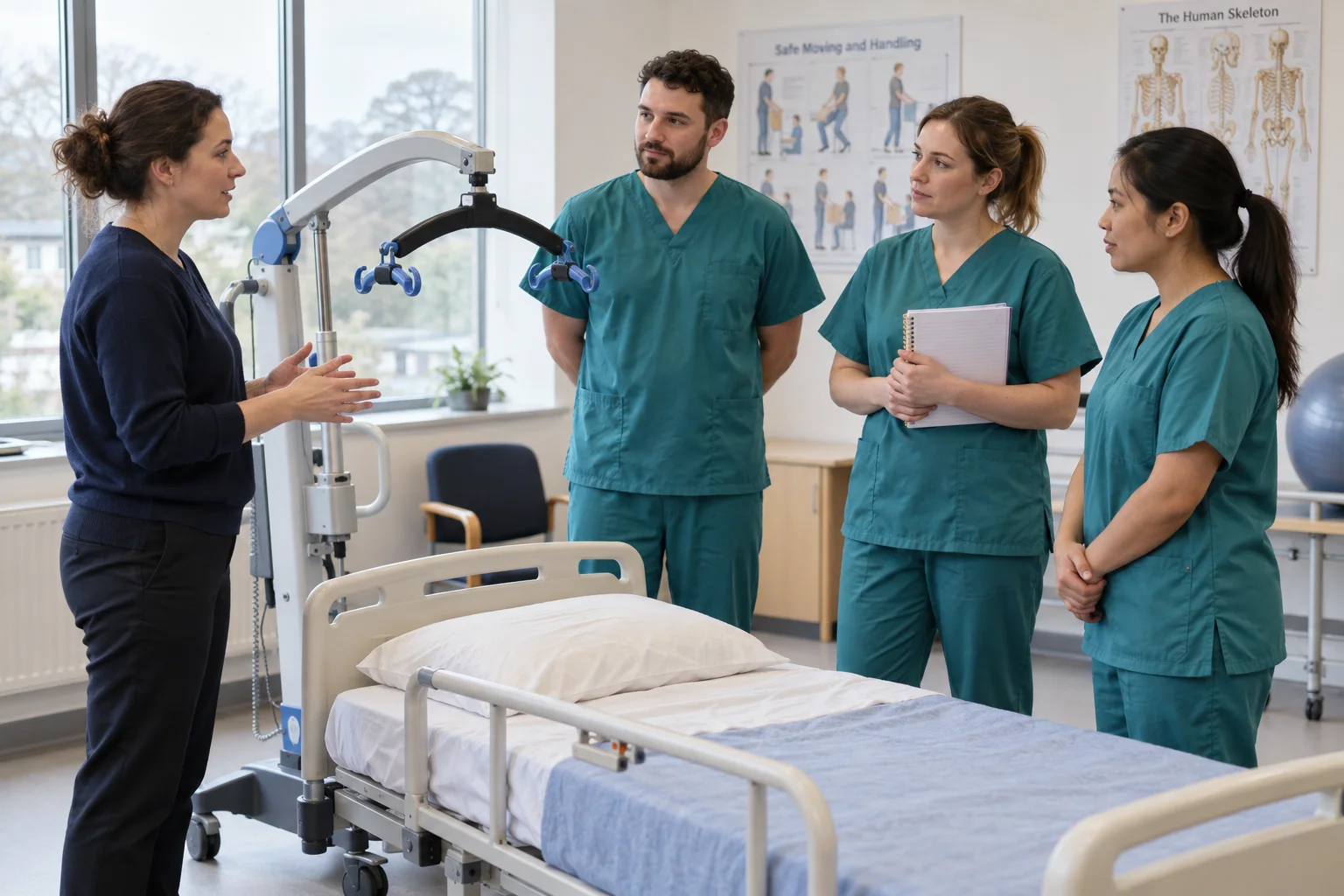
- Learning
- Theory and practical training
- Delivery
- Onsite at your facility or Galway
- Award
- Completion certificate
Tailored to your workplace
Practical training is shaped around your setting, equipment and day-to-day handling challenges.
Qualified instructors
Training is delivered by instructors with the relevant QQI Level 6 qualification.
Completion certificate
Participants receive a training certificate after successful practical completion.
Usafety delivers practical, evidence-based People Moving and Handling training tailored to the needs of each healthcare service. Led by experienced instructors with clinical backgrounds and the relevant QQI Level 6 instructor qualification, our courses combine the HSE Standardised Techniques with current risk assessment guidance and practical training shaped around the setting, equipment and handling challenges staff encounter.
Who we train
Healthcare and care settings
Specialist programmes tailored to the people-handling realities of each clinical and care setting.
Hospitals
Acute and community hospitals — ward staff, theatre porters, radiographers, ED.
Nursing homes
Residential and dementia care settings, including staff who transfer and reposition residents.
Care homes & disability services
Residential, day-services and supported-living settings. Service-user dignity built into the curriculum.
Primary care & community
Community nursing, public-health nursing, primary-care networks, hospices.
Curriculum
What the training covers
Every Usafety programme starts from your real environment and equipment. Onsite sessions allow practical training to use the slings, hoists and other equipment your team works with.
Programmes are designed to leave staff confident in the most common daily handling scenarios and clear on documentation, sign-off and audit trails.
- Bed transfers, sit-to-stand, repositioning
- Hoist use — ceiling, mobile, standing
- Sling selection and competence
- Sliding sheets and bed-rail aids
- Falls — assisted lifts and recovery
- Bariatric handling considerations
- Two-person and team-handling protocols
- Risk assessment and load assessment
- Documentation, sign-off and audit trails
Logistics
Format and duration
Theory module
Approximately 1 hour
The HSE blended programme begins with theory and a short assessment.
Practical module
Approximately 3–4 hours
Classroom-based practice relevant to the work activities, equipment and techniques identified through the training needs assessment.
Location
Onsite or Galway
Nationwide onsite delivery using your equipment, or hosted at our Galway training centre.
Instructor qualification
Relevant QQI Level 6 award
The qualification is held by the instructor. Participants receive a completion certificate after successfully completing the training.
Common questions
Frequently asked questions
What is people moving and handling training?
People moving and handling training teaches healthcare workers and care staff techniques for safely moving and positioning people. It covers transfers, hoist use, repositioning in bed, falls assistance and the use of sliding sheets, slide boards and bed-rail aids. Usafety training is delivered by instructors holding the relevant QQI Level 6 instructor qualification; participants receive a training completion certificate after successfully completing the practical module.
When do employees need people handling training?
Training needs should be identified through a role-specific training needs assessment and task risk assessment. HSE guidance says employees who handle objects and people must complete People Handling training relevant to their work activities, equipment and environment. The HSA says there is no set legal refresher requirement, but recommends intervals of not more than three years and earlier review after changes in work practices, equipment or tasks. Follow any applicable HSE or employer policy as well.
What is the difference between manual handling and people handling?
Manual handling covers the safe lifting and moving of inanimate loads — boxes, equipment, stock. People (or patient) handling specifically covers the safe moving and positioning of people, which is fundamentally different because the load is alive, can shift unpredictably, may resist or cooperate, and has dignity considerations. Healthcare workers, care assistants, nursing home staff and disability services need people handling training; warehouse and retail staff need manual handling.
Who delivers Usafety people moving and handling training?
Training is delivered by experienced instructors with clinical backgrounds who hold the relevant QQI Level 6 Manual or People Handling Instructor qualification. The qualification belongs to the instructor; participants receive a completion certificate for their employee training.
Can you train at our facility?
Yes. We deliver onsite at hospitals, nursing homes, hospices, disability services, primary-care networks and care facilities nationwide. Onsite training lets staff practise with the actual hoists, beds, slings and equipment they will be using day-to-day. We can also host group sessions at our Galway training centre.
How long does people moving and handling training take?
The HSE programme combines a theory module of approximately 1 hour with classroom-based practical training that takes approximately 3 to 4 hours depending on the techniques required. Training must be relevant to the participant’s work activities, equipment and environment.
How quickly can you respond to a quote request?
Quotes are typically back within 4 working hours from our Galway or Dublin office, with available dates included. For HSE bookings, managers must complete the required training request and venue documents before training is confirmed.
Get a people moving and handling quote
Tell us how many staff need training and we'll come back to you with a quotation, available dates and trainer recommendations.
- Quotation + available dates within 4 working hours
- Onsite delivery anywhere in Ireland
- Training tailored to your setting and equipment
People moving and handling guidance and related services